In astronomy, an eclipse is the phenomenon where a body is temporarily obscured by another body or its shadow. They typically occur when a moon casts a shadow on a planet, but they can also be when a moon passes through a planets shadow. Here on Earth, there are a handful of eclipses every year. They fall into two categories: solar eclipses, and lunar eclipses.
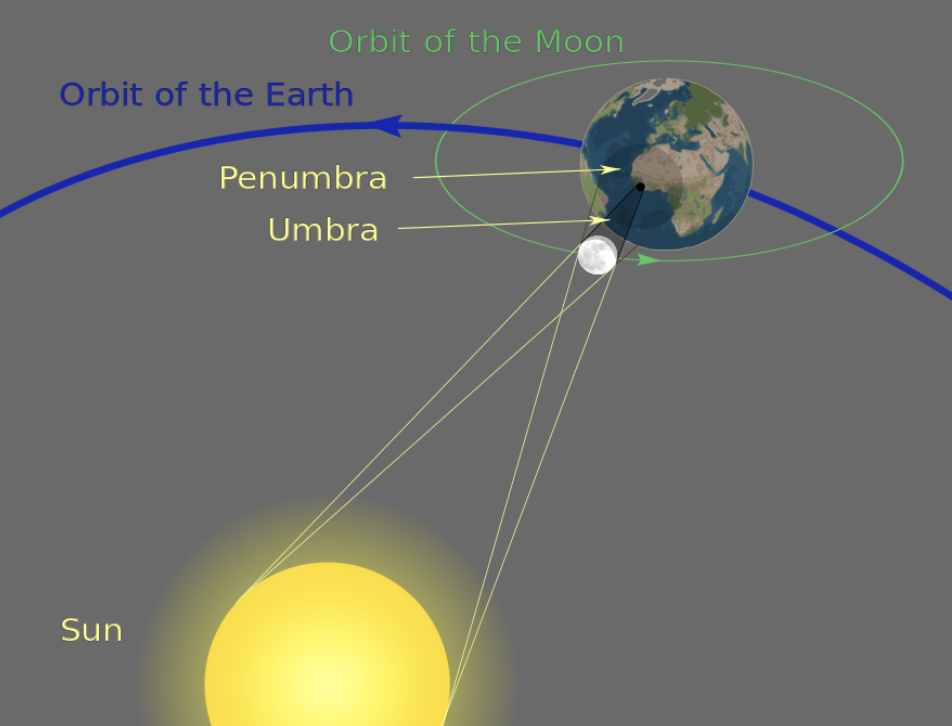
A solar eclipse occurs when the moon passes between the Earth and the Sun, as shown in the picture below, and casts a shadow on a portion of the Earth. When this happens, there can be a portion of the Earth for which the Moon completely obscures the Sun. This is called a total eclipse. The solar eclipse which is occurring in August this year will be visible from Ireland, and will show the Moon covering around 94% of the Sun.
A lunar eclipse occurs when the Moon passes through the Earth’s shadow. During such an eclipse, the moon takes on a reddish hue. This is caused by light from the sunrises and falls on Earth falling on the moon’s face. This gives it its “Blood Moon” name. Unlike solar eclipses, lunar eclipses can be seen from nearly an entire hemisphere of Earth. On the 28th of September 2015, Ireland will get a chance to witness a total lunar eclipse.
The Corona
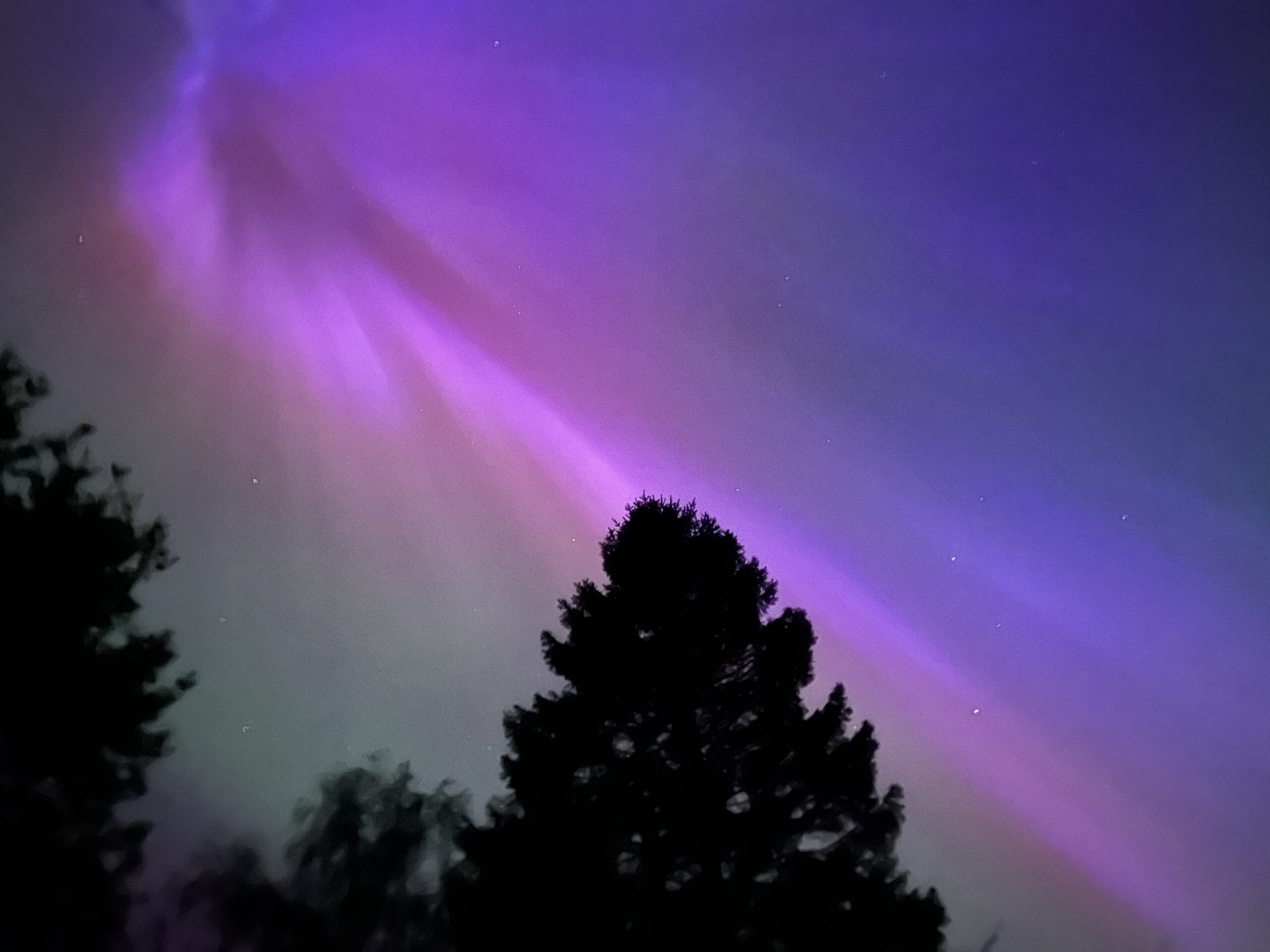
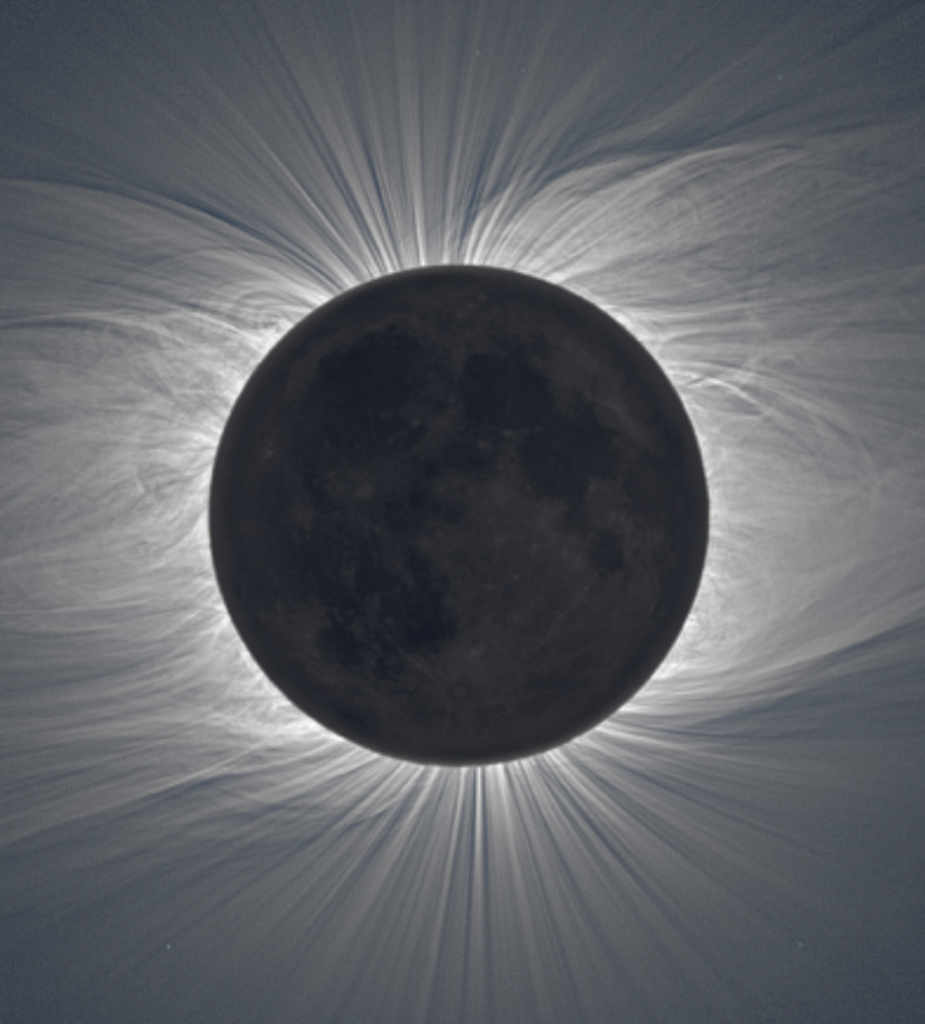
Since, by useful coincidence, the Sun and the Moon appear to be the same size when viewed from Earth (the Sun is around 400 times bigger than the Moon, and also about 400 times farther away), the Moon almost perfectly covers the Sun during an eclipse. This leaves visible a bright halo, as can be seen in the image on the right. This is called the ‘corona’, the highest, most tenuous layer of the Sun’s atmosphere. Extending millions of kilometers into space, the corona is a made up of ionized gas at temperatures in excess of a million degrees, but it is 10 billion times less dense than the air around you. The corona is of great interest for astrophysicists due to the effects it can have on the Earth. The solar wind, a constant stream of particles from the Sun travelling into space at hundred of kilometers per second, originates in the corona. The impact of the solar wind on the Earth’s atmosphere causes the Northern Lights. From time to time the corona can throw off massive amounts of materials in huge bursts, called Coronal Mass Ejections. These CMEs can have a disastrous effect on satellites and power grids around the globe. The solar wind and CMEs, their origins, their prediction, and their effects on the Earth, are among the main research topics of the DIAS Solar and Space Weather Group.
Solar Physics in Ireland
Ireland plays host to a great number of solar physics researchers who study the sun, and its effect on the environment around it, i.e. space weather.
The Dublin Institute for Advanced Studies hosts a Solar Physics and Space Weather Research Group at DIAS Dunsink Observatory who use a variety of ground and space-based telescopes to study the sun. These include Solar Orbiter, SOHO, I-LOFAR and more.
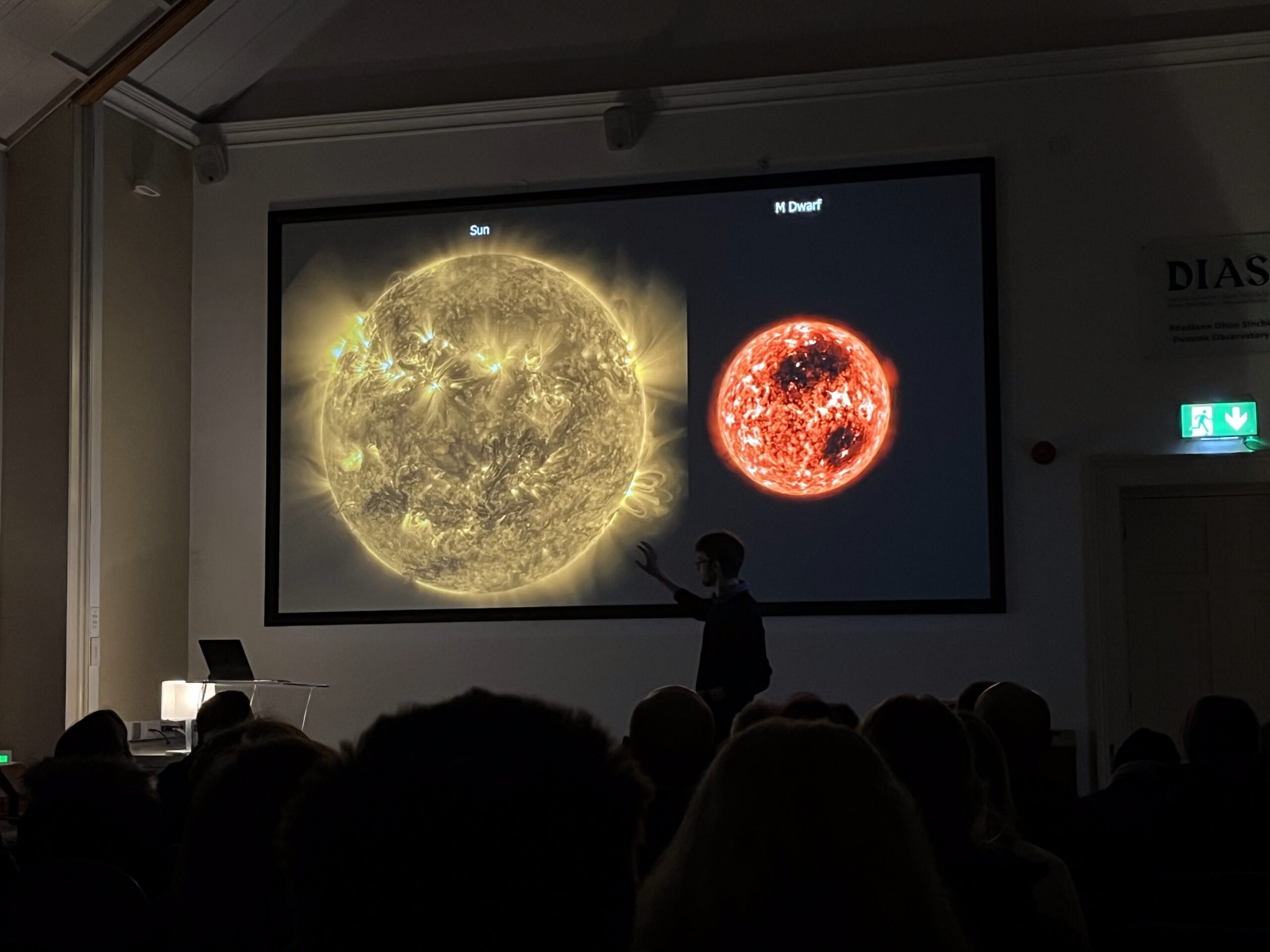
The team at the observatory also study changes in the earths magnetosphere caused by solar wind streams and coronal mass ejections. Among other things, this helps us to predict the likelihood of seeing the Aurora Borealis or Northern Lights.